Tool auctions in Ontario are one of the easiest ways to stock a garage, workshop or job trailer for less than retail, but only if you know what you are bidding on. Tools show up at estate sales, farm and shop dispersals, contractor retirements and liquidation auctions of new or returned stock, and each type of sale needs a slightly different approach. This guide covers where to find tool sales, how to judge used hand and power tools from photos or at a preview, and how to plan for fees, payment and pickup.
Where tools come up for auction in Ontario
Tools appear in almost every kind of sale, so it helps to know which ones to watch:
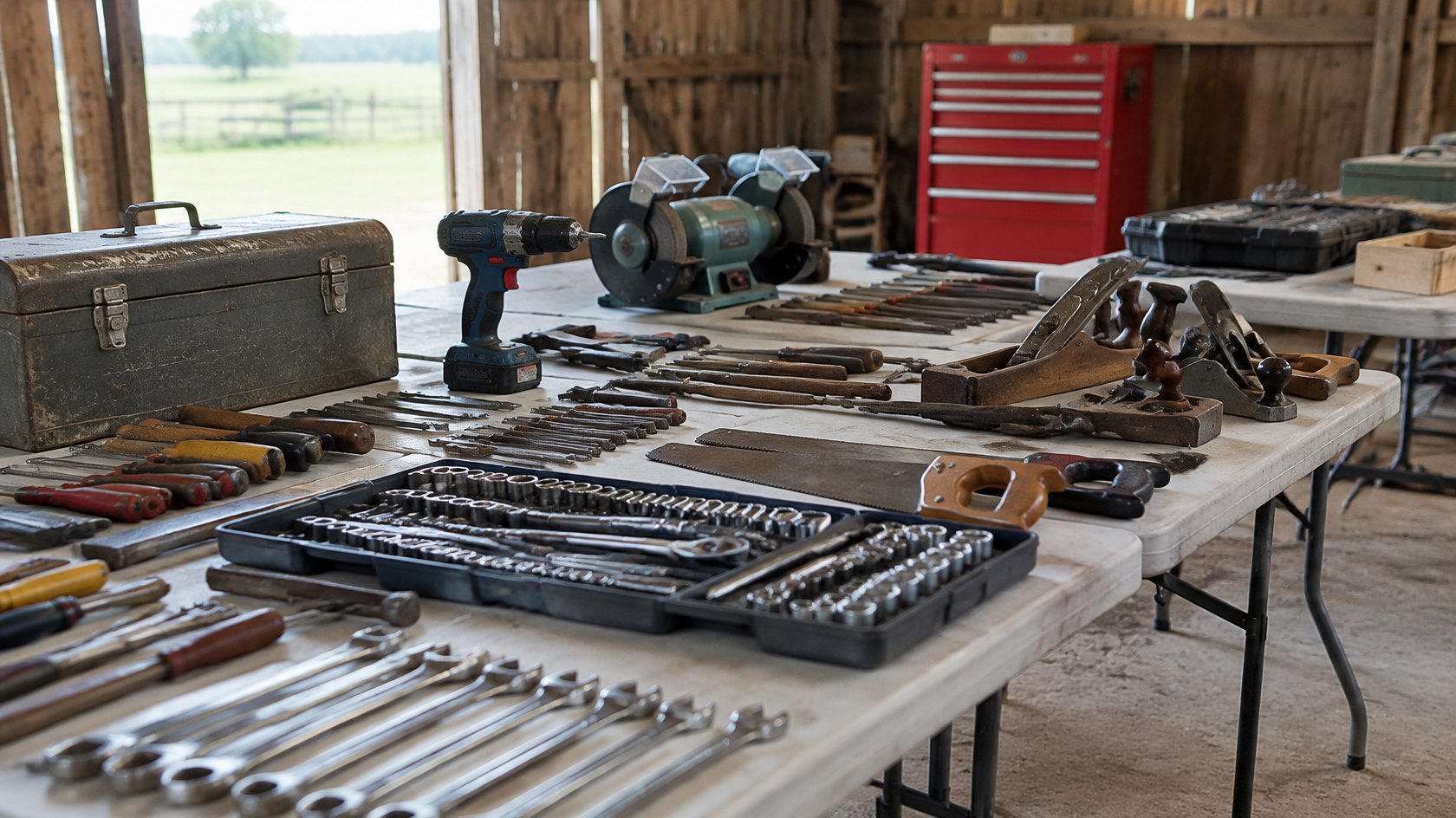
- Estate and downsizing auctions. A lifetime of hand tools, woodworking machines and garage contents often sells in one go.
- Shop, farm and contractor dispersals. When a business or farm closes, you may see welders, compressors, air tools, generators and heavier shop equipment. Our used farm equipment inspection checklist is useful if a sale also includes machinery.
- Liquidation and returns auctions. Many Ontario auction houses sell new, overstock, shelf-pull or customer-return items, including power tools and tool sets. Condition can range from sealed in the box to missing parts, so read each lot description closely.
To see what is open right now, browse the tools category or the full list of upcoming auctions. The liquidation category is worth checking too, since new and returned tools often sit there. If you want a feel for what kinds of tools have sold recently, the past auctions page keeps closed sales from the last 12 months.
How to judge used tools at auction
Most tool lots are sold as is, where is, with no warranty and no returns. That makes the time you spend before bidding the most important part of buying.
Hand tools
Hand tools are usually the safest buy because problems are easy to see. Look for:
- Cracked or mushroomed striking surfaces on hammers, chisels and punches.
- Rounded jaws or worn teeth on wrenches, sockets and pliers.
- Loose or split handles and bent shafts.
- Surface rust compared with deep pitting.
- Missing pieces in sets. A socket set with gaps is worth less than the case suggests, so count what is in the photo.
Power tools and cordless tools
With power tools, the photos and the preview are your only chance to check condition:
- Look at cords and plugs for cuts, tape repairs or missing ground pins.
- If the preview allows it, ask whether you can plug the tool in or try the trigger. Some sales offer this; many do not.
- For cordless tools, check whether batteries and a charger are included. A bare tool lot needs a compatible battery and charger, which can change what the lot is worth to you.
- Listen for grinding bearings and check for wobble in chucks, arbors and blades.
- Note the model number so you can look up parts and manuals.
Electrical safety and recalls
In Ontario, electrical products that are used, sold or advertised must carry a recognized certification mark, such as CSA or ULC. The Electrical Safety Authority lists the marks to look for and advises not to use an electrical product that lacks one. This matters most with imported new tools sold in liquidation lots, so check the label in the photos or ask the auctioneer.
It is also worth searching the model on the Government of Canada Recalls and safety alerts site before you bid, especially for older power tools, chargers and batteries.
Online and live tool auctions
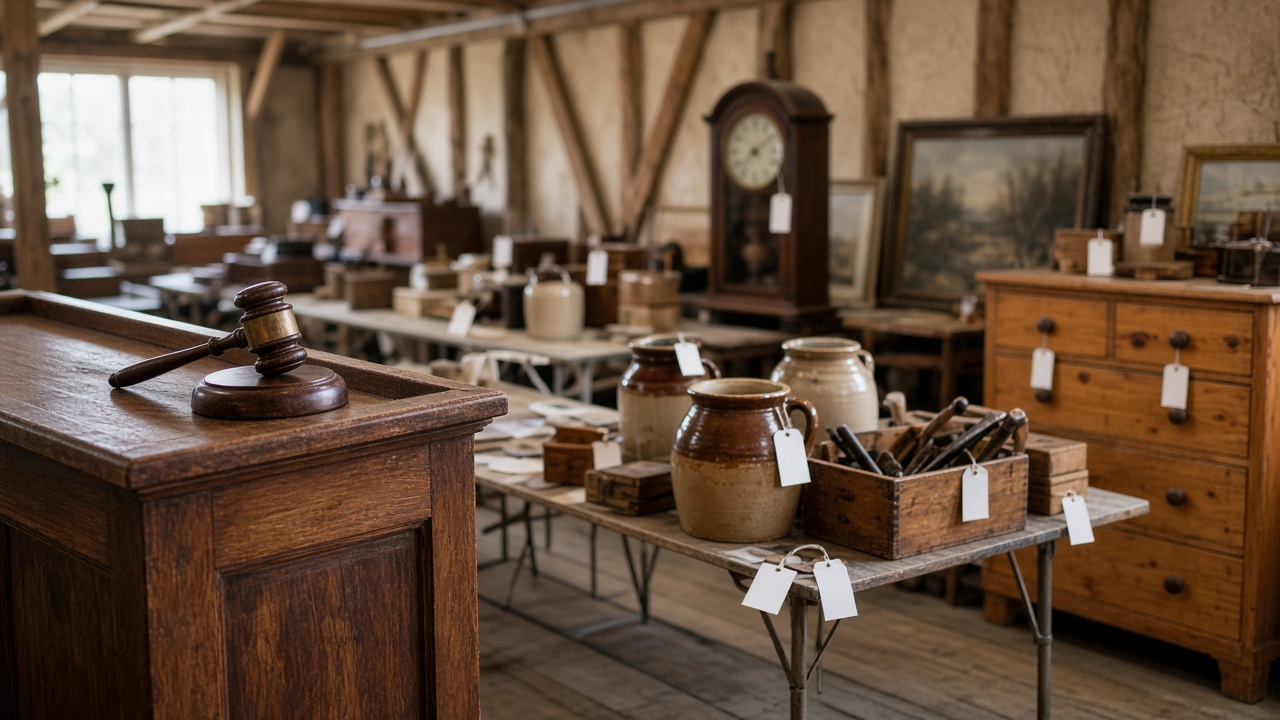
Many Ontario tool sales now run online, often on HiBid or an auction company's own site, with a scheduled preview and a pickup day. Live sales still happen too, especially farm and estate auctions where you can handle the tools in person. Our guide on how to bid at online auctions safely covers registering, setting a maximum bid and avoiding fake sale pages.
A few habits help in either format:
- Read the lot description and the terms. "Untested," "parts only" and "as is" mean what they say.
- Bid on what you would pay for the tool itself.
- Watch box lots. One tool you want may come with twenty you do not.
- Use previews. If a sale has an in-person preview, go. It is the best way to catch a cracked casting or a seized motor.
Fees, taxes and pickup
The hammer price is not your full cost. Most Ontario auctions add a buyer's premium, a percentage on top of the winning bid, and HST is usually charged as well. Rates differ from one auctioneer to the next and are listed in each sale's terms. Our explainer on what a buyer's premium is shows how to work out the true price before you bid.
Pickup is the other part to plan. Tool lots can be heavy and awkward:
- Check the pickup dates and hours before you bid. Many online sales give a short window, and items left behind may be forfeited under the terms.
- Bring help, blankets, straps and a vehicle that suits the load.
- Ask whether the auction company loads items or whether you must load them yourself.
- If you cannot make pickup, ask whether someone else can collect for you.
Finding a reputable auctioneer
Buying tools goes more smoothly with an auction company that writes clear descriptions, posts good photos, shares its terms up front and answers questions before the sale. You can browse companies across the province in our auctioneer directory, and each listing on the site links back to the auctioneer's own bidding page.
Frequently asked questions
Can I return a tool I bought at auction if it does not work?
Usually not. Most Ontario auctions sell items as is, where is, with no warranty, and all sales are final. Some auction companies set their own policies for items described incorrectly, so read the sale's terms before you bid and ask the auctioneer if anything is unclear.
Are new tools at liquidation auctions really new?
Sometimes. Liquidation lots can include new overstock, shelf pulls, open-box items and customer returns, and the condition varies from lot to lot. Read each description carefully, look at every photo, and assume a returned item may be missing parts unless the listing says otherwise.
Do I pay HST on tools bought at auction in Ontario?
In most cases, yes. Auction companies typically add HST to the winning bid and the buyer's premium. The exact charges are set out in each sale's terms, so check them before you bid.
How do I find tool auctions near me?
Browse the tools category for open sales across Ontario, or open your town or region page from the upcoming auctions list. The auctions this weekend page shows sales closing soon.