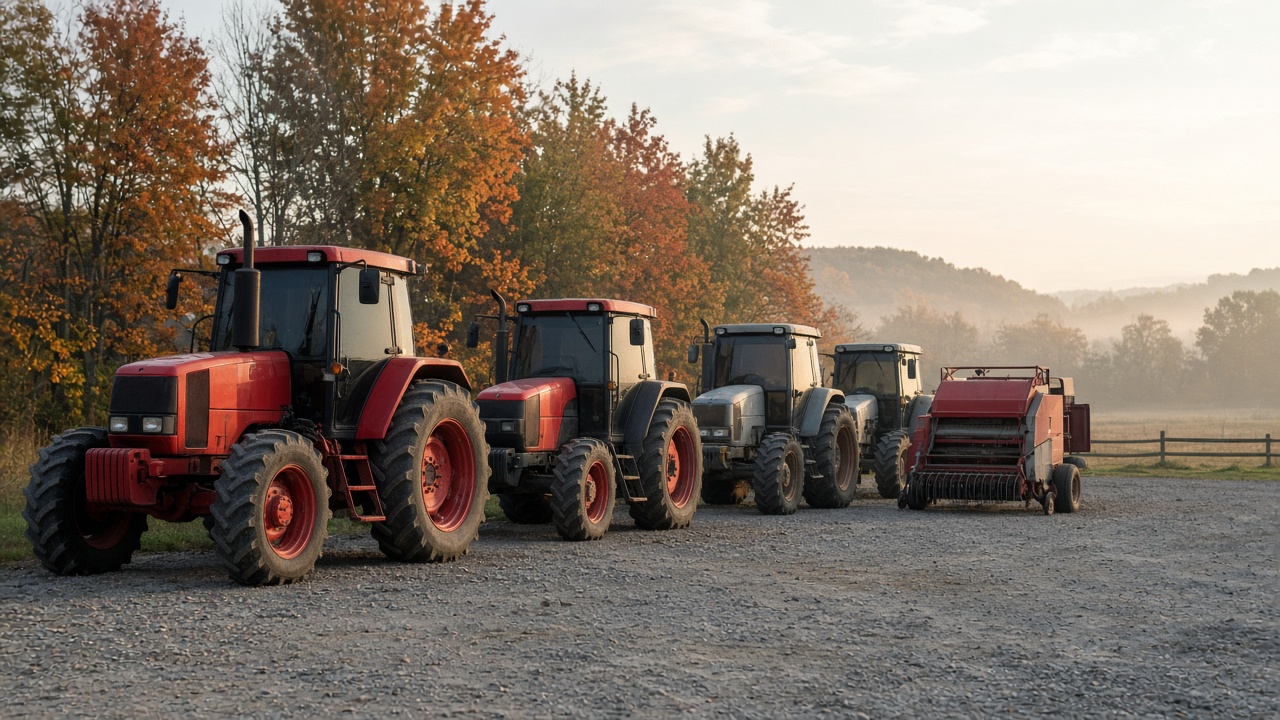
Buying used farm equipment at auction can save a significant amount compared with buying new or from a dealer, but auction machinery is almost always sold as is, with no warranty. A careful inspection before you bid is the best protection you have. This checklist covers what to look for on tractors, combines, tillage equipment, hay equipment and smaller implements at Ontario farm auctions.
Key takeaways
- Auction machinery is almost always sold as is, with no warranty, so inspection is your main protection.
- Read the sale bill and terms first: preview times, payment rules, buyer's premium and pickup deadline.
- Use a consistent checklist for every machine, then the specific checks for tractors, combines, tillage and hay equipment.
- Set a firm maximum bid that accounts for fees, tax, transport and likely repairs.
Before sale day
Good inspections start at home:
- Read the sale bill and terms. Note the preview times, payment rules, buyer's premium and pickup deadline. HST generally applies to the hammer price and premium; if you believe a farm exemption applies to you, confirm with the auctioneer in advance what documentation they require.
- Make a list of the machines you are interested in, with lot numbers.
- Research values. Look at completed sales for similar models and years on online bidding platforms and dealer listings.
- Call the auctioneer with questions about hours, service history, known issues or whether a machine can be started on preview day.
- Plan transport. Know how you will move the equipment home and what it will cost.
Farm sales are common in rural counties such as Huron County, Perth County, Wellington County and Chatham-Kent. The auctioneer directory lists companies that run farm and equipment sales across Ontario.
What to bring
- Flashlight and a small mirror for looking into tight spots
- Rags or paper towels for checking fluids
- Coveralls and gloves
- Tape measure
- Notebook or phone for photos, serial numbers and notes
- A knowledgeable friend or mechanic, if possible
General checklist for any machine
Start with an overall walk-around:
- Serial number and model plate. Record them and check they match the sale listing.
- Overall condition. Look for signs of regular maintenance versus neglect. Fresh paint can hide problems, so look closely.
- Frame and welds. Check for cracks, bends and repair welds, especially around hitches, axles and stress points.
- Leaks. Look under and around the machine for oil, coolant, hydraulic fluid or fuel.
- Tires. Check tread depth, cracks in sidewalls, mismatched tires and signs of uneven wear that could indicate alignment problems.
- Hoses and wiring. Look for cracked hoses, chafed wires and makeshift repairs.
- Safety equipment. Check shields, guards, ROPS and lighting. Missing guards add cost and risk.
- Manuals and records. Ask whether service records, manuals or parts books are included.
Tractors
- Hour meter. Note the hours, but remember meters can be replaced or broken. Compare against overall wear on pedals, seat and steering wheel.
- Engine. If allowed, check a cold start. Watch for hard starting, excessive smoke, knocking or uneven running. Check the oil for milky colour, which can indicate coolant contamination.
- Coolant. Look for oil in the coolant and check the radiator for damage.
- Blow-by. With the engine running, excessive fumes from the breather can indicate worn rings.
- Transmission and clutch. If you can operate the tractor, test every gear, the clutch engagement point and any power shift or shuttle functions.
- Hydraulics. Test the three-point hitch and remotes. Watch for slow lifting, drifting or leaks.
- PTO. Engage it and listen for unusual noises.
- Front axle. On four-wheel-drive models, check for play in the steering and kingpins and leaks at the hubs.
- Cab. Check glass, doors, seat, controls, heater and air conditioning if fitted.
Combines
- Separator and threshing components. Look at the rotor or cylinder, concaves and rasp bars for wear.
- Feeder house. Check the chain and slats.
- Belts, chains and sprockets. Look for wear, cracks and hooked teeth.
- Sieves and augers. Check for damage and wear.
- Headers. Inspect knives, guards, reels, augers and drives. Check whether the header is included in the lot or sold separately.
- Engine and separator hours. Note both if displayed.
- Bearings. Spin what you can by hand and listen for roughness.
Tillage and planting equipment
- Discs and shanks. Measure disc blade diameter and check shanks, sweeps and points for wear.
- Bearings and hubs. Check for play and roughness.
- Frames and hinges. Look for cracks, especially on folding wings.
- Planters and drills. Check seed meters, openers, closing wheels and drives. Ask whether monitors or electronics are included and working.
- Hydraulic cylinders. Look for leaks and pitted rods.
Hay and forage equipment
- Balers. Check the pickup, knotters or wrapping system, belts and chains. Ask whether the baler was used last season and whether it tied reliably.
- Mowers and conditioners. Check knives, discs, rollers and gearboxes for wear and leaks.
- Rakes and tedders. Check tines, arms and wheels.
- Wagons. Check the running gear, bed and tongue.
Smaller implements and tools
Small items often sell early in the day, so inspect them first:
- Check that all parts are present
- Look for cracked castings and bent components
- Check gearboxes for oil and leaks
- Confirm PTO shafts and shields are included
Questions to ask
- Was the machine in use recently, and for what?
- Are there any known problems?
- Has it been stored inside?
- Are keys, manuals and service records available?
- Can it be started or operated on preview day?
- Does anything else come with the lot, such as weights or attachments?
Bidding wisely
- Set a maximum price for each machine based on your research.
- Subtract the buyer's premium and HST to get your maximum bid.
- Budget for repairs, parts, tires and transport.
- Stick to your limit. Excitement can push prices above dealer levels.
After you buy
- Pay promptly according to the terms.
- Arrange removal within the pickup window. Many sales expect large equipment to be removed within a few days.
- Transport safely and legally. Use an appropriate trailer or hire a hauler. If driving on the road, ensure lights, slow-moving vehicle signs and safety chains are in place, and check whether width or weight rules require permits.
- Service the machine before putting it to work: change fluids and filters, grease all fittings and inspect belts and chains.
Printable checklist
- Serial number matches listing
- Frame and welds free of cracks
- No major leaks
- Tires in acceptable condition
- Engine starts and runs cleanly
- Fluids clean, no contamination
- Transmission and hydraulics work
- PTO operates without noise
- Wear parts within service limits
- Guards and safety equipment present
- Records, manuals and keys available
- Transport arranged
Browse upcoming farm and equipment auctions near you, such as auctions in Bruce and Grey or southwestern Ontario, and see the auctioneer directory for companies that specialize in farm sales.
Next steps
Find farm sales near you in Huron County or across southwestern Ontario, and use the auctioneer directory to contact sale organizers with questions before preview day.