Buying guides
Buying Used Farm Equipment at Auction: Inspection Checklist
A practical inspection checklist for tractors, combines, tillage and hay equipment at Ontario farm auctions.
Thursday, October 15, 2026

Buying guides
Auctions in Ontario · Sunday, October 11, 2026
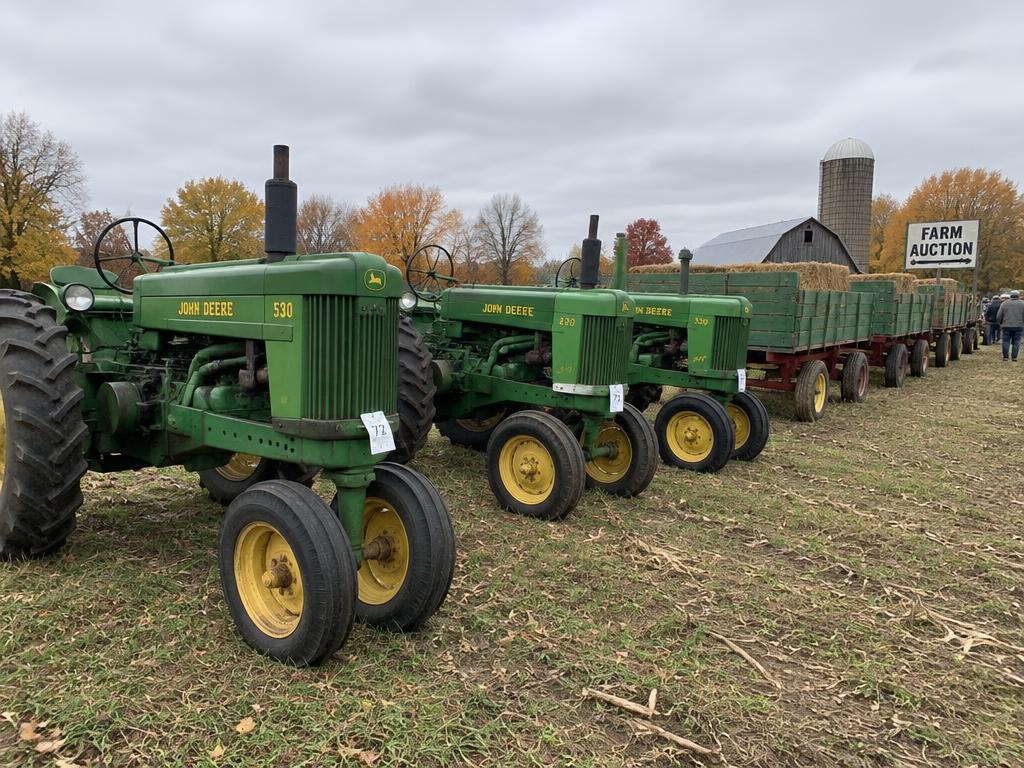
Farm auctions are a long-standing part of rural life in Ontario. When a farm family retires, downsizes or sells a property, the auctioneer often holds a sale right in the yard, with machinery lined up in rows, tools laid out on hay wagons and household items set out near the house. For a first-time buyer the day can feel fast and unfamiliar, but with a little preparation it is easy to enjoy and to buy with confidence. This plain-language guide walks through what to expect, from reading the sale bill to driving home with your purchases.
Key takeaways
- Read the sale bill carefully and make a list and budget before sale day.
- Arrive early, dress for the farm and inspect items before bidding starts.
- Know how bidding, payment and pickup work at that specific sale.
- Follow farm etiquette and safety rules around machinery and livestock areas.
The sale bill is the auctioneer's advertisement and rulebook for the day. It is usually posted online, printed in local farm papers and listed on sites like ours. Read it from top to bottom and note:
You can find upcoming farm sales on location pages such as Huron County, Perth County, Wellington County and Bruce and Grey.
Go through the sale bill and list the items you are interested in. For each one, research what similar items sell for at dealers and at other auctions, then decide the most you are willing to pay. Write that number down. Remember to add any buyer's premium and HST when setting your limit.
Farm auctions are rarely set up for shipping. Think about:
Farm sales are usually outdoors and often in fields or barnyards. Wear sturdy, waterproof boots and dress in layers. A hat, sunscreen or rain gear may be useful depending on the season. Bring a folding chair if you plan to stay for the whole sale.
Arriving early gives you time to:
Registration usually requires photo ID and your contact information. You will receive a bidder number on a card, which you hold up when you win an item.
Most farm auction items are sold as is, where is. Take your time looking at anything you want to buy:
For machinery, our inspection checklist for used farm equipment covers what to look for in more detail.
Farm auctions are usually live, with the auctioneer walking from item to item with a crowd following. Some sales also offer online bidding through a platform at the same time.
The auctioneer will describe each item, suggest an opening bid and then call for higher bids in set increments. To bid, raise your bidder card or hand clearly so the auctioneer or ringman can see you. Ringmen are staff who stand in the crowd, spot bids and relay them to the auctioneer.
A few things to know:
After you finish bidding, go to the office to pay. The clerk will total your purchases and any premium and tax. Pay using one of the methods listed on the sale bill and keep your receipt.
Then collect your items. You may need to show your receipt to staff before loading. Load carefully and safely, and ask for help if needed. Do not leave items behind without arranging it with the auctioneer, as they may be resold or forfeited.
Farm auctions are friendly community events, and a little courtesy goes a long way:
Farm sales are especially common across southwestern Ontario, and in rural parts of eastern Ontario and central Ontario. Our auctioneer directory lists auction companies that run farm sales, with links to their websites and upcoming sales.
Your first farm auction is likely to be the first of many. With some preparation, it is a practical way to find tools, equipment and household items, and an enjoyable day out in the country.
Find your first sale in Huron County, Perth County or across southwestern Ontario, and browse farm auctioneers in the auctioneer directory.
See upcoming sales: Auctions in Huron County
Buying guides
A practical inspection checklist for tractors, combines, tillage and hay equipment at Ontario farm auctions.
Thursday, October 15, 2026
Buying guides
How to research, inspect, bid on and transport antiques at Ontario auctions, with a beginner's checklist.
Thursday, October 15, 2026

Buying guides
Practical steps to check auctioneers, avoid scams, pay safely and plan pickup when bidding online in Ontario.
Thursday, October 15, 2026