
For sellers
Estate Sale vs Auction: Which Is Right for You?
Compare estate sales and auctions on cost, effort, reach and timing to choose the best way to clear a home.
Thursday, October 15, 2026
For sellers
Auctions in Ontario · Thursday, November 19, 2026
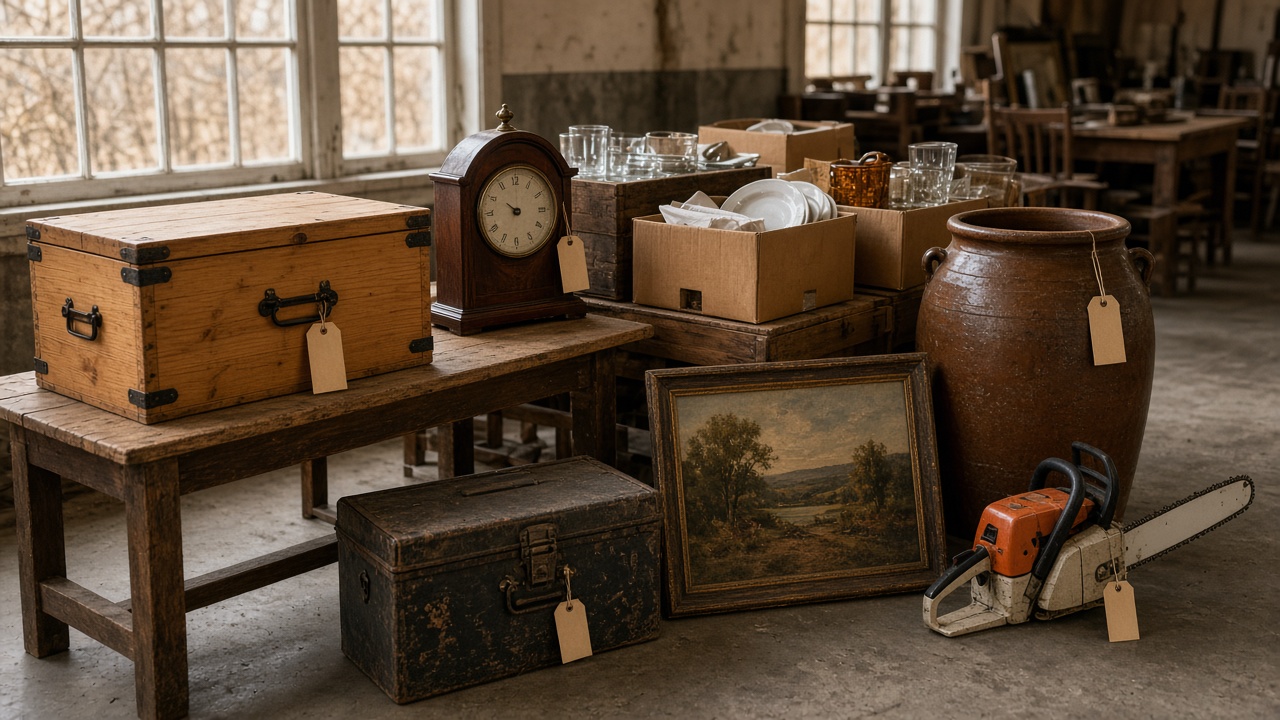
Consigning to an auction is one of the simplest ways to sell a few good pieces, a collection, a set of tools or a vehicle in Ontario without running a sale yourself. You hand the items to an auction company, they market and sell them for you, and you are paid what they bring, less the agreed fees. This guide walks through how consigning works, what to ask before you sign, and how to prepare your items so they sell well, wherever you are in the province.
If you are dealing with a whole household or estate rather than a handful of items, start with our checklist on selling through an estate auction instead.
When you consign, you keep ownership of your items until they sell, but the auctioneer acts as your agent. The company lists your items as lots, often alongside items from other sellers, and offers them in a live sale, an online timed sale, or both. After the sale, the auctioneer collects payment from the buyers and pays you the proceeds minus their commission and any other charges in your agreement.
Consignment works well for:
Consigning may suit you if you want an open, competitive sale without dealing with buyers, showings and payments yourself.
It may be less suitable if you need a guaranteed amount, if your items are very low in value, or if you need the money right away, since there is usually a wait between dropping items off and being paid. For a side-by-side comparison with other options, see estate sale vs auction.
Different auctioneers specialize in different things. A company that runs farm sales is not always the best home for fine jewellery, and a coin specialist may not take furniture. Look at what each company has sold recently and who their buyers are.
You can browse the Ontario auctioneer directory by area, and see what is selling now in categories such as antiques, collectibles, coins and currency, tools and vehicles. Our guide on how to choose an auctioneer in Ontario covers the questions to ask in more detail.
Every auction company sets its own terms, so get clear answers before you hand anything over:
Get the answers in a written consignment agreement and keep a copy. Read it fully before signing.
Two different charges are involved in most Ontario auctions. The seller's commission is taken from the hammer price before you are paid. The buyer's premium is a separate percentage the buyer pays on top of the winning bid, and it usually goes to the auctioneer rather than to you. Our post on what a buyer's premium is explains it in plain terms.
To estimate what you might take home, try the seller mode of our Ontario auction fee calculator. Enter a possible hammer price and the commission from your agreement. Treat the result as a rough guide only, since hammer prices are never guaranteed.
A little preparation helps your items sell and helps the auctioneer describe them accurately:
Some items come with legal or safety requirements:
Most companies either have you bring items to their hall or yard, or arrange pickup for larger lots, sometimes for a fee. You can often follow along: many Ontario sales are listed on our site, so you can watch online auctions or check what is on this weekend.
After the sale, the auctioneer collects from buyers and sends you a settlement statement listing each lot, its hammer price, and every deduction. Check it against your consignment list and agreement, and ask about anything you do not understand.
It depends on the company. Payment timing should be written in your consignment agreement, so ask before you sign and make sure the date is clear.
Many auctioneers allow a reserve on higher-value items, but not all do, and some charge a fee if the reserve is not met. Ask about their reserve policy before consigning.
Policies vary. Some companies return unsold items, some offer them again in a later sale, and some charge a fee or require you to pick them up by a set date. Make sure this is covered in writing.
Ready to consign? Browse the auctioneer directory to find companies near you, or look at current Ontario auctions to see what kinds of items are selling right now. Compare each company's written terms before you decide.
For sellers
Compare estate sales and auctions on cost, effort, reach and timing to choose the best way to clear a home.
Thursday, October 15, 2026
For sellers
How to find, compare and hire the right auction company for your farm, estate, business or collection.
Thursday, October 15, 2026

For sellers
How to choose an auctioneer, what commission to expect and how to get the best result.
Tuesday, October 13, 2026